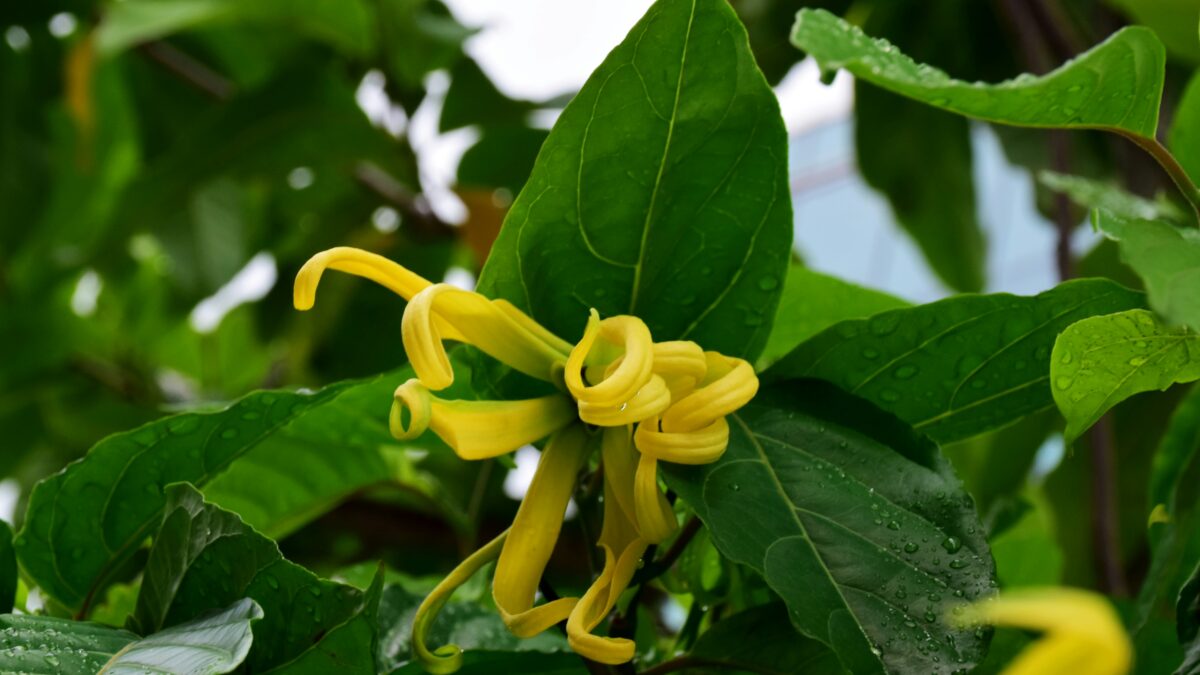
Ylang-ylang, scientifically known as Cananga odorata, is a tropical tree native to the Philippines, where it has long been valued for its fragrant flowers. Over time, its cultivation has expanded to several other regions including Malaysia, Indonesia, New Guinea, the Solomon Islands, and parts of Australia such as Queensland. It also grows in select areas of Cambodia, Thailand, and Vietnam. The tree is most admired for its highly aromatic blossoms, commonly referred to as “ylang-ylang,” which are used to extract an essential oil renowned for its rich, floral scent.
The name “ylang-ylang” is a Spanish adaptation of the Tagalog word “ilang-ilang,” derived from “ilang,” meaning “wilderness”—a reference to the tree’s natural habitat. A frequent misinterpretation of the name is “flower of flowers,” although this is linguistically inaccurate.
Ylang-ylang essential oil is prized for its complex fragrance, which is described as deep, sweet, and floral with subtle notes reminiscent of jasmine, neroli, custard, and even a touch of rubber. This unique scent profile makes it a prominent ingredient in perfumery and aromatherapy, where it is used for both its olfactory qualities and potential therapeutic benefits.
In aromatherapy, ylang-ylang oil is believed to help reduce high blood pressure, ease stress, and act as a natural aphrodisiac. However, its applications extend beyond aromatic use, particularly in skincare, where it offers several notable benefits.
Ylang-ylang oil is effective in balancing sebum production, making it suitable for both oily and dry skin types. By helping to regulate the skin’s natural oil levels, it promotes a more even and hydrated complexion. Its antiseptic and antimicrobial properties make it useful in managing acne-prone skin, as it can help reduce inflammation, calm irritation, and combat acne-causing bacteria.
The oil’s hydrating effects support skin softness and elasticity, contributing to a nourished and healthy appearance. Rich in antioxidants, ylang-ylang oil also plays a role in protecting the skin from environmental stressors such as pollution and free radicals, which contribute to premature aging. Regular use may help reduce the appearance of fine lines and wrinkles, resulting in a more youthful complexion.
Additionally, ylang-ylang oil may enhance overall skin tone and clarity by minimizing discoloration and blemishes. It supports a radiant, even skin tone, making it a valued ingredient in formulations aimed at improving skin appearance.
Despite its many benefits, ylang-ylang oil should be used with caution. As with all essential oils, it is highly concentrated and must be diluted before topical application. Performing a patch test is strongly advised to ensure that no allergic or adverse reaction occurs, particularly for individuals with sensitive skin.
Overall, ylang-ylang oil is a multifaceted botanical ingredient that brings both sensory pleasure and dermatological benefits, making it a valuable addition to modern skincare and wellness routines.